The last time a car pulled out in front of you unexpectedly, did you feel scared? The last time your kiddo got defensive and started yelling at you, did you feel angry? The last time your best friend sent you a text out of nowhere just to remind you they love you and value your friendship, did you feel happy or grateful?
Every emotion you feel has a deeply interconnected biological correspondence in your brain. In other words, feelings are more than just a mental phenomenon – they are physical as well.
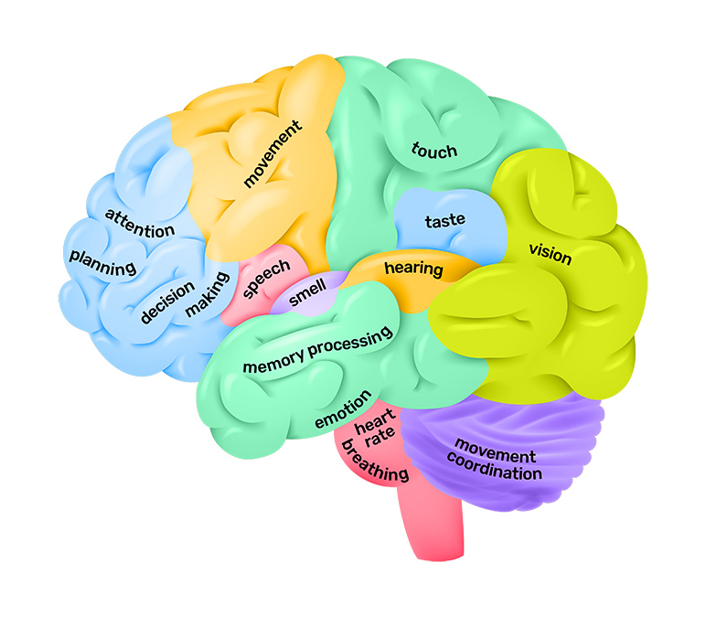
Your brain is a little bit like a bunch of cooked spaghetti noodles, all crammed into your skull. Those noodles are made up of both chemical and electric pathways that send and receive information about your daily conscious and subconscious experience of life. Different areas of noodles specialize in performing different important functions. See the simple graph above to help explain it visually.
The innermost area of the brain is responsible for the origination of many of our emotional reactions, which are the “stories” our brain tells us about what is happening. However, the information produced here affects all the other areas of the brain, and vice versa.
These emotional reactions, and all other neural information, travel in the brain at the blindingly fast speed of around 260 miles per hour. At any given moment, your brain is processing millions of inputs/outputs all at once. If you have ever felt overwhelmed, this fact gives the feeling more context!
On the chemical side of brain function, there are a variety of hormones and neurotransmitters that play a pivotal role in your feelings. Glutamate & GABA (learning/memory/processing), Epinephrine & Norepinephrine (fear/awareness), Dopamine (pleasure/motivation), Serotonin (sleep/happiness), and Oxytocin (connection) are all working hard in your head as you read this article. We’ll explore each of these in more depth this month on The Willow Center’s Facebook and Instagram pages.
The coolest part of learning more about our own brain science is this: the activities we participate in, the way we take care of ourselves, and the way we live our lives can directly affect our brain chemistry and pathways both positively and negatively. Stay tuned for part two later this month to learn more!
Written by Chase Cotten, Community Director